
Hearing aids stand to benefit an estimated 28.8 million U.S. adults. Your devices collect and amplify speech noise to bring you closer to the people in your life. For all they offer, you probably want to make sure you’re giving them five-star care. Let’s look at why hearing aid cleaning is important and how you can do it properly.
Why Does Hearing Aid Cleaning Matter?
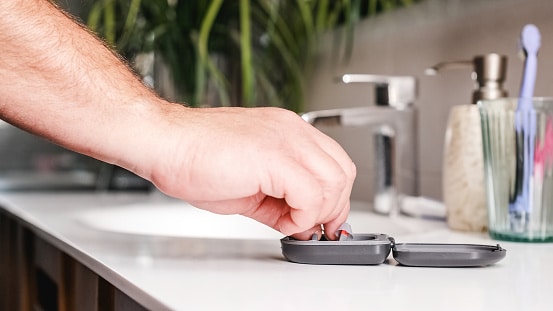
Your hearing aids collect wax, dust, oil and debris throughout the day. While they might not look filthy every day, all that miscellaneous matter can hide in microphone ports, earmolds and everywhere else on the device. Not only does all that dirt and bacteria raise your risk of ear infections, but it can also interfere with the way your devices function.
Clogged microphones or speakers can cause distorted or muffled sound, as well as a whistling noise known as feedback. Cleaning your devices nightly is the best way to ensure every friend’s story, coworker’s presentation and waiter’s list of specials at The Finn comes through loud and clear.
How to Properly Clean Your Hearing Aids
You will need a hearing aid cleaning kit, which includes a soft cloth, brush and wax pick, to clean your devices. Your hearing aid manual will offer model-specific instructions on cleaning, but typical steps include:
- Wipe down the exterior. Use a soft, dry cloth to wipe the entire outer casing of your hearing aid gently. For any remaining dirt or wax, wipe them down with a slightly damp, hearing aid-specific cloth.
- Remove debris from openings. Using the soft brush included in your hearing aid kit, gently clean the microphone ports, speaker, vents, body casing and the tubing and earmold or dome if applicable.
- Clear wax from small crevices. Use a wax pick or loop to remove stubborn wax from the receiver, vents or other tight spaces. Always work gently and avoid pushing debris deeper into the area.
- Replace wax guards. Check and replace wax guards or filters as needed. This is especially important for in-the-ear (ITE), in-the-canal (ITC) and completely-in-the-canal (CIC) models, where wax buildup is more likely to occur.
- Clean domes or earmolds. For behind-the-ear (BTE) and receiver-in-the-canal (RIC) devices, detach the earmold or dome if possible. Wash earmolds and tubing in warm, soapy water and let them air-dry completely before reattaching. If they retain moisture, use a hearing aid dryer or blow dryer on a cool setting to dry them completely.
For more information on hearing aid care, contact Hearing Systems today.